

Choosing the wrong substrate for your digital press isn't just a minor error; it's a guaranteed recipe for melted fusers and costly downtime. Most press operators have experienced the frustration of static-heavy sheets causing multi-sheet feeds or toner that simply wipes off a non-porous surface. You need materials that withstand high-heat environments while maintaining dimensional stability and color accuracy. Selecting the right synthetic paper for digital printing requires a deep understanding of material science and thermal management to avoid these common production pitfalls.
We agree that consistent performance is the only metric that matters in a high-volume print environment. This guide will help you master the technical nuances of digital synthetic substrates to ensure high-fidelity results and peak press-room efficiency. We'll examine the critical performance differences between polyester and polypropylene, help you identify the correct mil thickness for specific project requirements, and provide actionable data to reduce your press downtime. By focusing on the physical properties of the substrate, you can transform difficult printing challenges into reliable, professional-grade output.
Key Takeaways
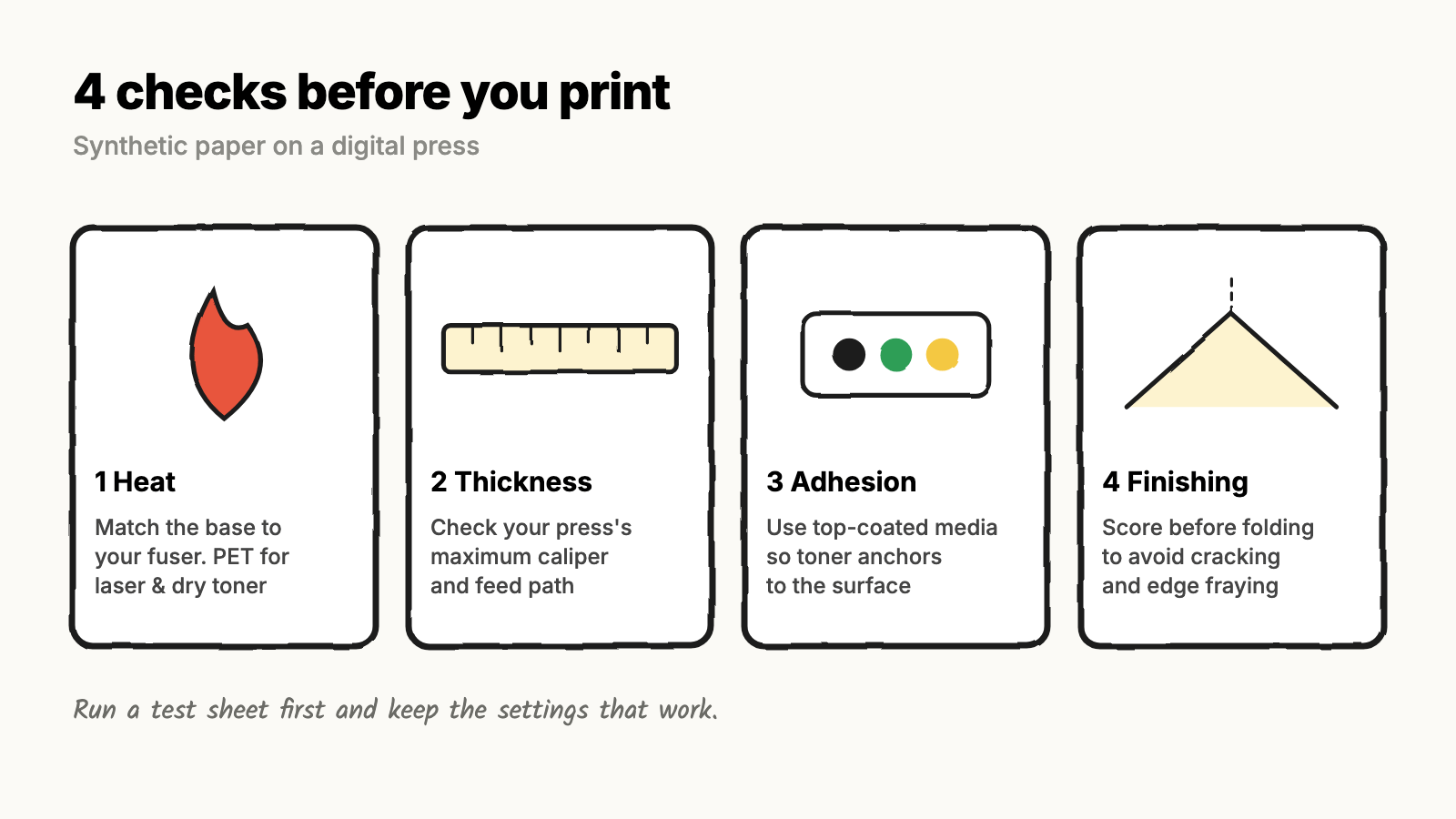
Differentiate between polyester and polypropylene bases to prevent substrate melting in high-heat fuser units.
Understand the technical relationship between mil thickness and density to ensure proper feeding and stacking across various press types.
Discover how specialized top-coats on synthetic paper for digital printing facilitate superior toner adhesion and ink anchoring on non-porous surfaces.
Master post-press finishing techniques, such as specific creasing and cutting protocols, to prevent white-line cracking and edge fraying.
your production workflow by matching substrate thermal stability with the specific heat requirements of your digital engine.
Understanding Synthetic Paper for Modern Digital Printing Systems
Synthetic paper is a high-performance material engineered to provide the tactile experience of wood-pulp paper with the physical resilience of plastic. Unlike traditional paper, Synthetic paper is a manufactured film derived from petroleum resins, primarily polypropylene (PP) or polyester (PET). This composition makes the substrate 100% waterproof, tear-resistant, and chemically inert. These properties are essential for applications that face heavy handling or environmental exposure, such as outdoor signage, industrial manuals, and restaurant menus. Because the material is tree-free, it also offers a sustainable alternative for brands looking to reduce their reliance on traditional forestry products.
The success of synthetic paper for digital printing depends on specialized top-coats applied during the manufacturing process. Since plastic films are non-porous, they cannot absorb standard inks. The top-coat acts as a molecular bridge, allowing digital toners and inks to anchor securely to the surface. Without these coatings, the toner would simply sit on the surface, leading to immediate adhesion failure or scratching. For the modern print shop, selecting a substrate with a high-quality, digital-ready coating is the only way to ensure professional results that won't degrade over time.
The Chemistry of Digital Substrates
Substrate selection often comes down to the choice between Biaxially Oriented Polypropylene (BOPP) and Polyester (PET). Polypropylene is flexible and cost-effective but has a lower melting point, making it sensitive to high-heat fusers. Polyester offers superior thermal stability and rigidity. Successful printing also depends on surface energy, measured in Dyne levels. A high Dyne level ensures proper "wet-out," meaning the toner or ink spreads evenly and bonds permanently rather than bead up on the non-absorbent surface.
Digital vs. Offset Synthetics: Why Compatibility Matters
Offset synthetics are designed for oxidative or UV-cured inks and often lack the thermal resistance required for digital engines. If you run an offset-only synthetic through a high-heat digital press, you risk the material warping or melting onto the fuser rollers, leading to catastrophic equipment failure. It's vital to source "digital-certified" media. These substrates are specifically formulated to handle the electrostatic charges and extreme temperatures of dry toner systems, ensuring a clean pass through the press without jams or static-related multi-sheet feeds.
By using synthetic paper for digital printing, commercial printers can produce high-durability products without the need for secondary lamination. This efficiency reduces labor costs and shortens production timelines while delivering a finished product that is virtually indestructible in most consumer and industrial environments.
Key Technical Specifications: Thickness, Weight, and Density
Understanding the physical dimensions of synthetic paper for digital printing is critical for press-room efficiency. Unlike traditional paper that uses "points" or GSM as primary indicators of quality, synthetic media is measured in "mils." While one mil equals one-thousandth of an inch, the density of the material creates a distinct tactile and mechanical profile. Press operators often find that a 10 mil synthetic sheet feels significantly different from 10 pt cardstock, primarily because the plastic polymers lack the grain and fiber structure of wood pulp.
Synthetics possess a lower density than paper, which directly impacts how the press handles the material. For example, a 10 mil synthetic sheet may have a GSM of approximately 250, whereas a 10 pt cardstock might exceed 270 GSM. This difference means synthetic paper for digital printing feels lighter but maintains superior structural integrity and tear resistance. High opacity is another hallmark of these substrates. Most digital-grade synthetics offer opacity ratings between 94% and 98%, ensuring that double-sided graphics remain crisp without distracting show-through. Achieving high whiteness and brightness levels, often in the 90 to 95 range, allows for accurate color reproduction that rivals premium coated papers.
Calculating Thickness for Specific Applications
Selecting the correct mil thickness depends on the end-use environment and the mechanical limits of your digital engine. Use these industry standards as a guide:
5–8 mil: These lightweight grades are engineered for high-fold endurance. They are the standard for fold-out maps, technical manuals, and durable brochures where weight reduction is necessary for mailing.
10–12 mil: This is the industry "sweet spot." These thicknesses provide the rigidity required for waterproof restaurant menus, membership cards, and retail shelf talkers.
14 mil+: Heavy-duty substrates in this range are used for rigid tags, outdoor signage, and plant stakes. These require robust fuser systems and specialized media settings to ensure proper transport.
Weight and Caliper Correlation
The relationship between weight and caliper in synthetic media is non-linear compared to paper. Caliper is the precise measurement of a single sheet's thickness, typically expressed in mils or microns, which determines the material's rigidity and how it interacts with the press's internal transport system. Because polyester and polypropylene have specific gravities different from cellulose fibers, the press's pick-up mechanisms must be calibrated for the material's unique friction and weight. Sourcing high-quality Synthetic Papers with consistent caliper specifications is the most effective way to prevent unexpected downtime during long production runs.
Synthetic vs. Paper: Measurement Comparison
| Synthetic Thickness (Mil) | Approx. Synthetic GSM | Typical Paper Equivalent |
|---|---|---|
| 5 mil | 120–135 | 80 lb. Text |
| 8 mil | 200–215 | 80 lb. Cover |
| 10 mil | 250–270 | 10 pt. Cardstock |
| 14 mil | 350–380 | 14 pt. Cover |
Thermal Stability: The Critical Factor for Laser and Dry Toner
The fuser unit represents the most significant technical hurdle for synthetic paper for digital printing. Dry toner systems rely on a combination of heat and pressure to melt toner particles into the substrate's top-coat. While traditional wood-pulp paper withstands these temperatures without incident, synthetic polymers react differently to thermal stress. Polypropylene (PP) substrates, while versatile, have a relatively low melting point and can begin to distort at temperatures as low as 320°F. If the press fuser exceeds this threshold, the material may warp, shrink, or in extreme cases, wrap around the fuser rollers. This "meltdown" risk makes material selection the most important decision in the pre-press phase.
For high-heat digital engines, Rigid Polyester Paper (PET) is the industry standard. Polyester remains dimensionally stable at temperatures where polypropylene fails. This stability ensures that the sheet doesn't shrink during the fusing process, which is vital for maintaining tight registration on double-sided jobs. When the substrate maintains its size and flatness, you avoid the common "rainbow effect" where colors fail to align on the second pass. Using a heat-stabilized PET substrate allows press operators to run at standard production speeds without constantly adjusting fuser settings to prevent material deformation.
Fuser Temperature Management
Digital presses use either roller-fusing or flash-fusing technology. Roller-fusing applies direct contact heat, which is more aggressive on synthetic media. It's essential to monitor for signs of thermal stress such as curling, edge-waving, or surface bubbling. If these occur, you must lower the fuser temperature or increase the press speed to reduce dwell time. Our high-durability substrates are engineered to handle these thermal peaks, but we recommend running a test batch to calibrate the specific heat-sink properties of the mil thickness you've selected.
Managing Static in the Digital Press Room
Static electricity is the byproduct of triboelectric charging, which occurs as plastic sheets move through the friction-heavy transport path of a digital press. This "cling" causes multi-sheet feeds and delivery tray jams that kill press-room efficiency. While in-line static eliminators help, the most effective solution is using a substrate with an integrated anti-static coating. These coatings allow the charge to dissipate before the sheets reach the delivery pile. For optimal performance, maintain press room humidity between 40% and 50%. Dry air exacerbates static issues, making it difficult for even the best anti-static treatments to function correctly.
By prioritizing thermal stability and static control, you ensure that synthetic paper for digital printing performs with the same reliability as premium bond paper. This technical precision reduces waste and ensures that every sheet exits the press flat, dry, and ready for immediate finishing.
Optimizing Post-Press Performance: Cutting, Folding, and Binding
Finishing synthetic substrates requires a departure from traditional paper-handling protocols. While the material is prized for its durability, that same resilience presents challenges during the cutting and folding stages. For guillotine cutting, ensure knives are sharp and recently honed. Dull blades generate friction heat, which can cause the edges of synthetic paper for digital printing to fuse or "weld" together in the stack. Reducing clamp pressure is also recommended to prevent marking or distorting the plastic-based sheets. If you notice the stack pulling or the blade dragging, it's often a sign of heat buildup at the cut line.
To prevent white-line cracking on dark solids, you must use a dedicated creasing tool rather than a standard score. Creasing creates a double-hinge effect that stretches the material without rupturing the toner bond. Die-cutting also requires specialized tooling; because the material is tear-resistant, blades must be kept at peak sharpness to ensure clean, burr-free edges on complex shapes. Mechanical binding options like spiral or wire-o are the most reliable for synthetic projects. These methods avoid the chemical compatibility issues associated with adhesives and allow for 360-degree rotation, which is ideal for industrial manuals or heavy-use menus. Perfect binding is possible but requires PUR glue; traditional EVA hot-melts will simply peel off the spine as soon as the book is opened.
The Art of the Synthetic Fold
Synthetics are extruded films, meaning they lack the cellulose grain found in wood-pulp paper. However, they do possess a "machine direction" from the manufacturing process that can influence how the sheet behaves during high-speed folding. For thicker grades of Rigid Polyester Paper, heat-assisted scoring can soften the polymer just enough to produce a crisp, professional fold that stays flat. This is particularly important for multi-page synthetic booklets where "page creep" and bulkiness can otherwise compromise the finished look. Always fold with the machine direction when possible to achieve the cleanest results.
Adhesives and Coating Compatibility
Standard paper glues fail on non-porous synthetics because they require a permeable surface to absorb moisture and create a mechanical bond. When producing pocket folders or bound documents, you must use high-tack synthetic glues or PUR (Polyurethane Reactive) systems. Regarding surface protection, the top-coats on modern digital synthetics are often robust enough that over-lamination is unnecessary. However, if your project requires extreme chemical resistance or a specific tactile finish, ensure your UV coating is specifically formulated for plastic adhesion to prevent peeling. Testing a small batch is the only way to verify that your selected adhesive or coating will hold up under real-world conditions.
Sourcing High-Performance Digital Substrates from 4S Graphics
Sourcing the correct synthetic paper for digital printing requires a partner that understands the mechanical requirements of modern press engines. 4S Graphics maintains a comprehensive inventory of specialized substrates designed for industrial and commercial applications. Our selection includes high-durability Synthetic Papers and Rigid Polyester Paper, each engineered to meet the thermal and physical standards discussed in this guide. We prioritize material performance over marketing hype. This ensures that every sheet delivered meets the technical specifications required for high-fidelity reproduction.
Our commitment to technical precision extends beyond the catalog. Industrial printing requirements often involve environmental factors like chemical exposure or extreme UV levels. To address these needs, we offer custom sourcing solutions and technical data sheets that detail the specific resistance levels of our polymers. Our global distribution capabilities ensure that high-performance media is accessible to commercial operations regardless of their geographic location. This logistical reliability is a cornerstone of our B2B service model, providing the stability needed for long-term production contracts.
Why 4S Graphics for Digital Professionals?
Print professionals choose 4S Graphics because we provide direct access to high-performance media like rigid polyester, Polyester Laser Plates, and DTF Transfer Film. Our technical support team specializes in substrate-to-press matching, helping you select the right synthetic paper for digital printing to avoid fuser damage and registration errors. We maintain strict control over coating quality to ensure repeatable color results across different production runs. This level of consistency is vital for brand-sensitive projects where color drift is unacceptable. By focusing on the material science behind the substrate, we help you achieve professional-grade results with every pass.
Next Steps: Samples and Consultation
Testing is a critical phase of any digital project involving synthetic media. We encourage press operators to order sample packs to conduct in-house press testing under their specific environmental conditions. This step verifies that fuser temperatures and static control measures are optimized before a large-scale rollout. You can also consult with our specialists on substrate selection for high-traffic environments or specialized industrial use cases. We provide the expertise needed to navigate difficult printing challenges with confidence. Contact 4S Graphics today for your digital synthetic needs to secure the substrates your next high-performance project requires.
Maximizing Production Reliability with Digital Synthetics
Success in digital synthetic production depends on the precise alignment of fuser temperature management and substrate stability. By prioritizing rigid polyester for high-heat environments and mastering specialized creasing techniques, you eliminate the risks of material distortion and adhesion failure. These technical choices ensure that your finished products maintain their structural integrity in the most demanding field conditions. Utilizing the correct synthetic paper for digital printing allows your shop to produce indestructible menus, industrial manuals, and signage with the same efficiency as standard paper stocks.
4S Graphics serves as a specialized supplier of rigid polyester and technical substrates, providing high-durability media engineered for extreme environments. We support commercial print shops worldwide with global shipping and a deep inventory of performance-grade materials. It's this focus on material science that ensures your press-room achieves repeatable, high-fidelity results on every project. Explore our full range of high-performance Synthetic Papers to secure the media your next professional-grade application requires. We look forward to supporting your technical substrate needs.
Frequently Asked Questions
Is synthetic paper recyclable alongside standard office paper?
No, synthetic paper cannot be recycled with traditional wood-pulp paper. Because these substrates are petroleum-based films, they contaminate the paper recycling stream. You must recycle them through specialized plastic recycling programs, typically categorized as Level 5 (PP) or Level 1 (PET) plastics depending on the base polymer. Always verify local industrial recycling capabilities for plastic films before disposal.
Can I use standard offset synthetic paper in my digital laser printer?
You should never use offset-only synthetics in a digital laser press. Offset materials lack the thermal stability required to withstand the high temperatures of a digital fuser and may melt onto your equipment. Furthermore, the top-coats on offset media aren't designed for toner adhesion, which leads to immediate print failure and potential machine damage.
What is the highest temperature rigid polyester paper can withstand?
Rigid polyester (PET) substrates generally maintain dimensional stability at temperatures up to 400°F. This high thermal threshold allows the material to pass through dry toner fuser units without shrinking or warping. In contrast, polypropylene bases often begin to distort at temperatures exceeding 320°F, making polyester the superior choice for high-heat digital engines.
Does synthetic paper for digital printing require a special primer?
Digital-certified synthetic paper for digital printing does not require an additional primer. These materials are manufactured with a specialized surface coating that facilitates immediate toner anchoring and ink wet-out. If you are using a press like an HP Indigo, ensure you source media specifically treated with a sapphire or digital-grade primer to ensure compatibility with liquid electrophotography.
Why is my synthetic paper sticking together in the delivery tray?
Sheets sticking in the delivery tray is caused by triboelectric charging, commonly known as static electricity. This occurs as plastic sheets move through the press at high speeds. To resolve this, use substrates with integrated anti-static coatings and maintain your press room humidity between 40% and 50%. Dry environments significantly increase static cling in non-porous materials.
Can I write on synthetic paper with a standard ballpoint pen?
Yes, most synthetic substrates accept ballpoint ink and permanent markers once the print has cooled. However, water-based pens, gel pens, and fountain inks won't work effectively. Because the surface is non-porous, liquid-heavy inks cannot soak into the material and will smudge or bead up rather than drying.
How do I prevent ink scratching on digital synthetic prints?
Scratching is usually a sign of improper toner fusion or a mismatch between the ink and the substrate coating. Verify that your press fuser is set to the correct temperature for the mil thickness you're running. If durability is a critical requirement for extreme environments, applying a compatible UV coating can provide an additional layer of mechanical protection against abrasion.
What is the difference between tear-resistant and tear-proof paper?
The term tear-resistant often refers to traditional paper that has been reinforced with a plastic core or lamination. Tear-proof refers to 100% synthetic films that have no wood fiber content. Synthetic paper for digital printing is technically tear-proof because the cross-linked polymer chains don't have a grain, making it nearly impossible to rip by hand.
Shop the products in this guide
- Digital Synthetic Papers
- Polyester Grade synthetic papers
- Graffiti Polyester Paper
- Graffiti Soft Poly
- Blended Poly synthetic papers